
Hearing the Pulitzers: A piece-by-piece, episode-by-episode exploration of the winners of the Pulitzer Prize in Music with hosts Andrew Granade and David Thurmaier.
Episodes
Sep 15, 2026
Sep 15, 2026
46 min
In this special bonus episode, Dave and Andrew talk with 2011 Pulitzer Winner Zhou Long. Where did he find the libretto for Madame White Snake? What does he think of people analyzing the opera's music? And what role did Bedřich Smetana play in the opera's creation? We hope you enjoy hearing from him about these insights and more!
Aug 26, 2026
Aug 26, 2026
28 min
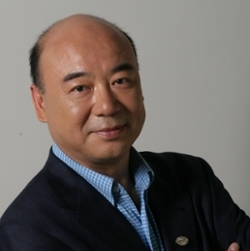
In this episode, Dave and Andrew explore an opera by the composer of our podcast theme, Zhou Long. It's been fifty years since another staged opera won the prize. Is this a worthy work to break that streak? They discuss the opera's synopsis, the music, and how Zhou Long blends Eastern and Western music and themes in the opera.
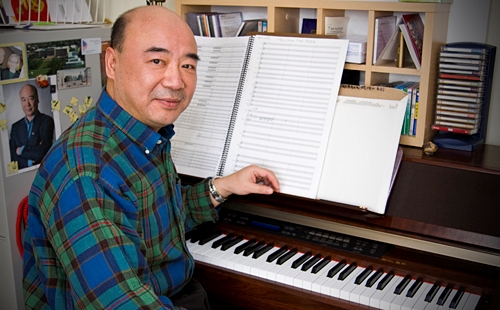
If you'd like more information about Zhou Long and Madame White Snake, we recommend:
- Tong Cheng Blackburn, “In Search of Third Space: Composing the Transcultural Experience in the Operas of Bright Sheng, Tan Dun, and Zhou Long” PhD diss., Indiana University, 2015.
- Fang Bo [方博], “The Transtextual Gender Construction in the Opera Madame White Snake.” Asian-European Music Research Journal 7 (Summer 2021): 1–18.
- Lu Tan, “The Integration of Chinese and Western Elements in Zhou Long’s Opera Madame White Snake” DMA essay, University of Illinois Urbana-Champaign, 2024.
- Zhou Long's publication site.
Jul 15, 2026
Jul 15, 2026
31 min
In this episode, Dave and Andrew explore a concerto by one of the most-performed living composers, Jennifer Higdon. Will they think the concerto deserves more play? How does it fit with the other Pulitzer concerto winners?
If you'd like more information about Jennifer Higdon, we recommend:
- This series of YouTube interviews between Higdon and Hilary Hahn
- Christina Reitz's book Jennifer Higdon: Composing in Color (McFarland, 2018)
- Laura Dallman's article "Considering autonomy and collaboration in three concerti by Jennifer Higdon" in The Routledge Handbook of Women's Work in Music (2021)
Jun 10, 2026
Jun 10, 2026
25 min
In this episode, Dave and Andrew explore Steve Reich's Double Sextet, but can't help but talk about his earlier work. How does this later piece stack up to classics like Music for 18 Musicians? Could we also view this as a lifetime achievement award for a composer whose music would not have been considered for the Pulitzer Prize in the 1970s?

If you'd like more information about Steve Reich, we recommend:
- Steve Reich, Writings on Music, 1968 - 2000 (Oxford University Press)
- Steve Reich, Conservations (Hanover)
- Keith Potter, Four Musical Minimalists: La Monte Young, Terry Riley, Steve Reich, Philip Glass (Cambridge University Press)
Apr 20, 2026
Apr 20, 2026
23 min
In this episode, Dave and Andrew explore an oratorio for voice and percussion that mingles minimalism, Bach, and a fairy tale. Will that mixture prove potent for them? And has Andrew ever been more excited for a particular winning piece?

If you'd like more information about David Lang and The Little Match Girl Passion, we recommend:
- David Lang's website
- Dominic Wells's "In the Footsteps of Bach's St. Matthew Passion: The Passion Setting of David Lang and James MacMillan" Tempo 67, no. 264 (2013): 40–51.
- Tom Service's BBC podcast "The Listening Service" on The Match Girl Passion
- William Robin's Industry: Bang on a Can and New Music in the Marketplace New York: Oxford University Press, 2021
Feb 13, 2026
Feb 13, 2026
25 min
In this episode, Dave and Andrew listen to the first work without a written score to ever win a Pulitzer, Ornette Coleman's album Sound Grammar. What will they think about this new direction for the prize? And it wouldn't be Hearing the Pulitzers without discussing some drama from the judges! We also discuss a special certificate granted to a deserving late jazz musician.

If you'd like more information about Ornette Coleman, we recommend:
- Stephen Rush's book Free Jazz, Harmolodics, and Ornette Coleman (Routledge, 2016)
- Michael Stephan's book Experiencing Ornette Coleman: A Listener's Companion (Rowman and Littlefield, 2017)
- Nathan Frink's dissertation "Dancing in His Head: The Evolution of Ornette Coleman's Music and Compositional Philosophy" (University of Pittsburgh, 2016)
Dec 19, 2025
Dec 19, 2025
26 min
In this episode, Dave and Andrew discuss a piano concerto that the composer, Yehudi Wyner, said "permits expression of the raunchy as well as the refined." How will that duality sit with the hosts? Why doesn't a distinguished composer like Wyner get more performances?? And what former PP winners make an appearance in the episode?
If you'd like more information about Yehudi Wyner, we recommend:
- June Yin-Hsuan Chen's dissertation, "Analysis of Yehudi Wyner's Piano Concerto, 'Chiavi in Mano'"
- Chapter 17: "A Tale of Two Concertos: The Piano Concertos of Yehudi Wyner and Bernard Rands" in Observations on Music, Culture, and Politics by Daniel Asia
- David Cleary's "An Intoxicating Wyner at 70" in The New Music Connoisseur 8, no. 2 (2000) 9–10.
Nov 19, 2025
Nov 19, 2025
17 min
In 2020, Dave and Andrew released their 9th episode, covering Douglas Moore's forgotten opera Giants in the Earth without being able to hear it or even see the score. Now, after 50 years after the last performance, Giants in the Earth has appeared again in a new production by the South Dakota Symphony Orchestra. Will it be a hit or a miss?
If you'd like to know more about the performance, we recommend:
- Information about the live performance by the South Dakota Symphony Orchestra
- The streaming performance of Giants in the Earth
- Joshua Barone's coverage of the performance in the New York Times, "An Operatic ‘Diamond on the Side of the Road’ Catches Light Again."
Nov 4, 2025
Nov 4, 2025
32 min
In this episode, Dave and Andrew explore a concerto for orchestra that achieved great heights by, in the words of its creator Steven Stucky, "standing on the shoulders of those who have already cleared the path ahead." But will our hosts appreciate the view? And who were some of the other nominees this year? We also discuss a rule change within the Pulitzer Prize award process that took effect with this year's winner.
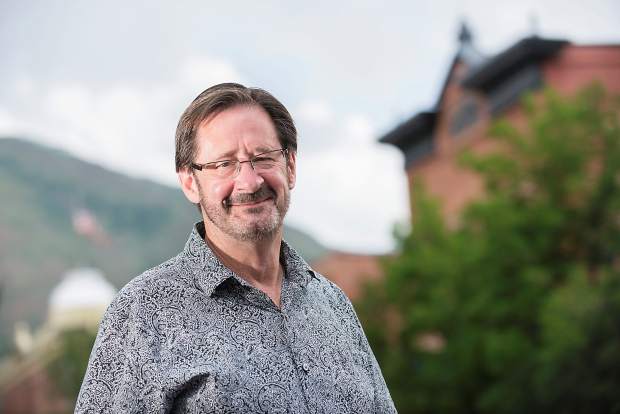
If you'd like more information about Steven Stucky, we recommend:
- "Stucky, Hartke, Crockett: Conversations in Los Angeles." Contemporary Music Review, 10, no. 1 (1994): 51–73.
- Franklin Crawford, "Steal this concerto, please: An interview with Steven Stucky" Cornell Chronicle, April 21, 2005.
- Steven Stucky, Lutosławski and his Music (Cambridge: Cambridge University Press, 1981).
- This Washington Post article about the changes to the music prize from June 2004.
Aug 15, 2025
Aug 15, 2025
29 min
In this episode, Dave and Andrew dive into a work inspired by Shakespeare's The Tempest. Will the work live up to the Bard's reputation? And does this piece fit into the typical mold of a Pulitzer Prize winning work?
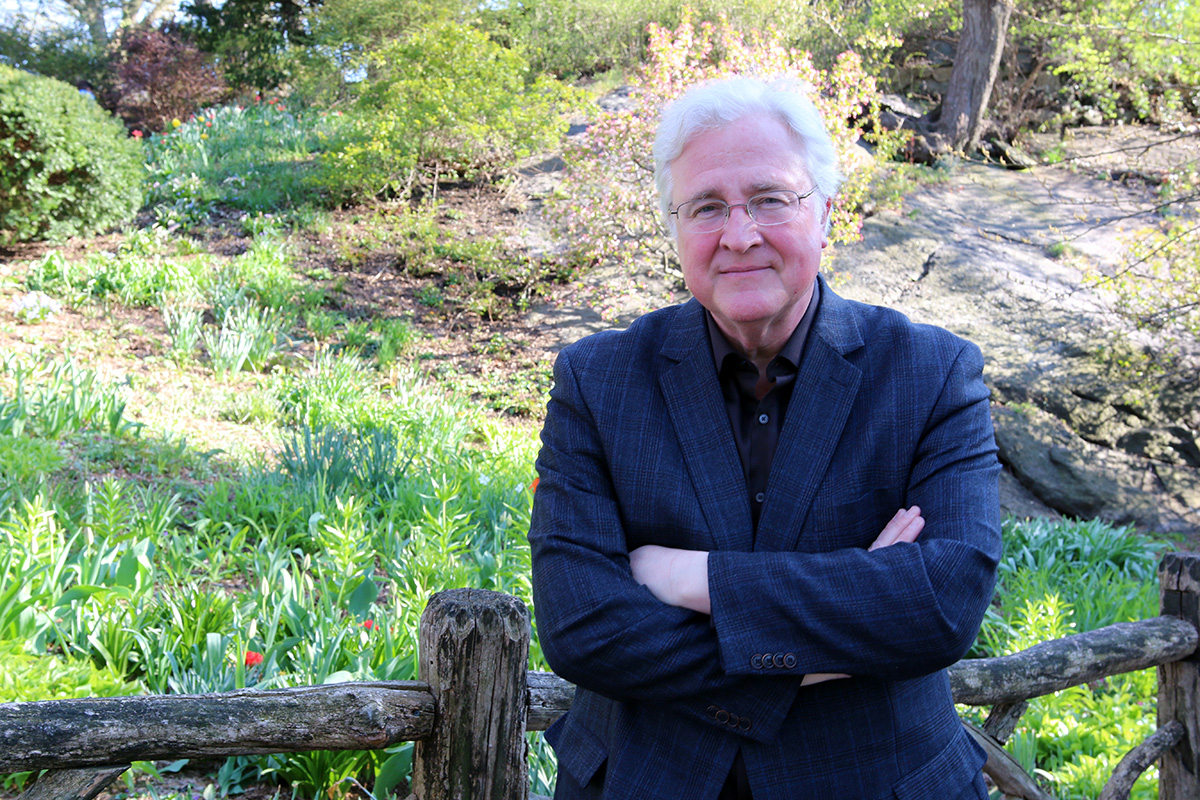
If you'd like more information about Paul Moravec, we recommend:
- Paul Moravec's personal website
- Dialogue with Moravec for the Kansas City Lyric Opera's production of The Shining
- Paul Moravec's short article “Tonality and Transcendence.” Contemporary Music Review vol. 6. no. 2 (1992): 39–42.